Study · Landscape design
Colorado foothills
Native ground
A garden shaped by the foothills. Layered planting, stone paths, and sheltered places to gather connect a mid-century home to its landscape.
Begin with what is here.
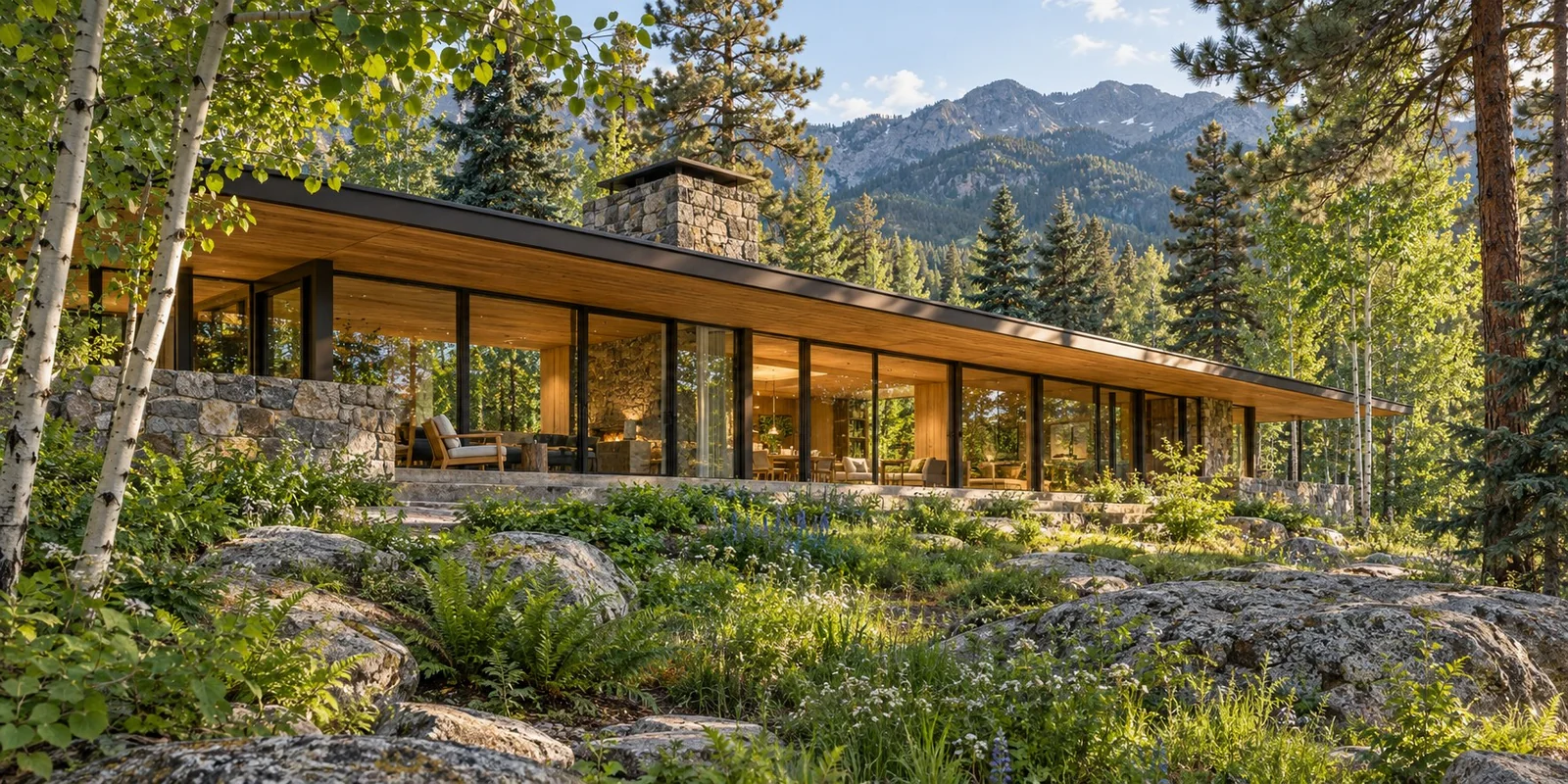
Native Ground starts with the belief that design grows from the landscape. A slope, an established tree, a band of stone, or a view toward the foothills can become the beginning of a garden. Before choosing what to add, we look at what gives the place its character and how people move through it. The aim is a landscape that feels connected to its setting and offers more ways to live outdoors.
Plant in layers, leave room for the view.
Trees give a garden its larger shape; shrubs, grasses, and lower planting bring depth closer to the ground. We explore a rhythm of fuller areas and open spaces, allowing a boulder, a branch, or a distant ridge to remain in view. Native and regionally adapted planting can form the starting point, with the final palette developed around the particular site, available light, soil, water, and the care the garden will receive.
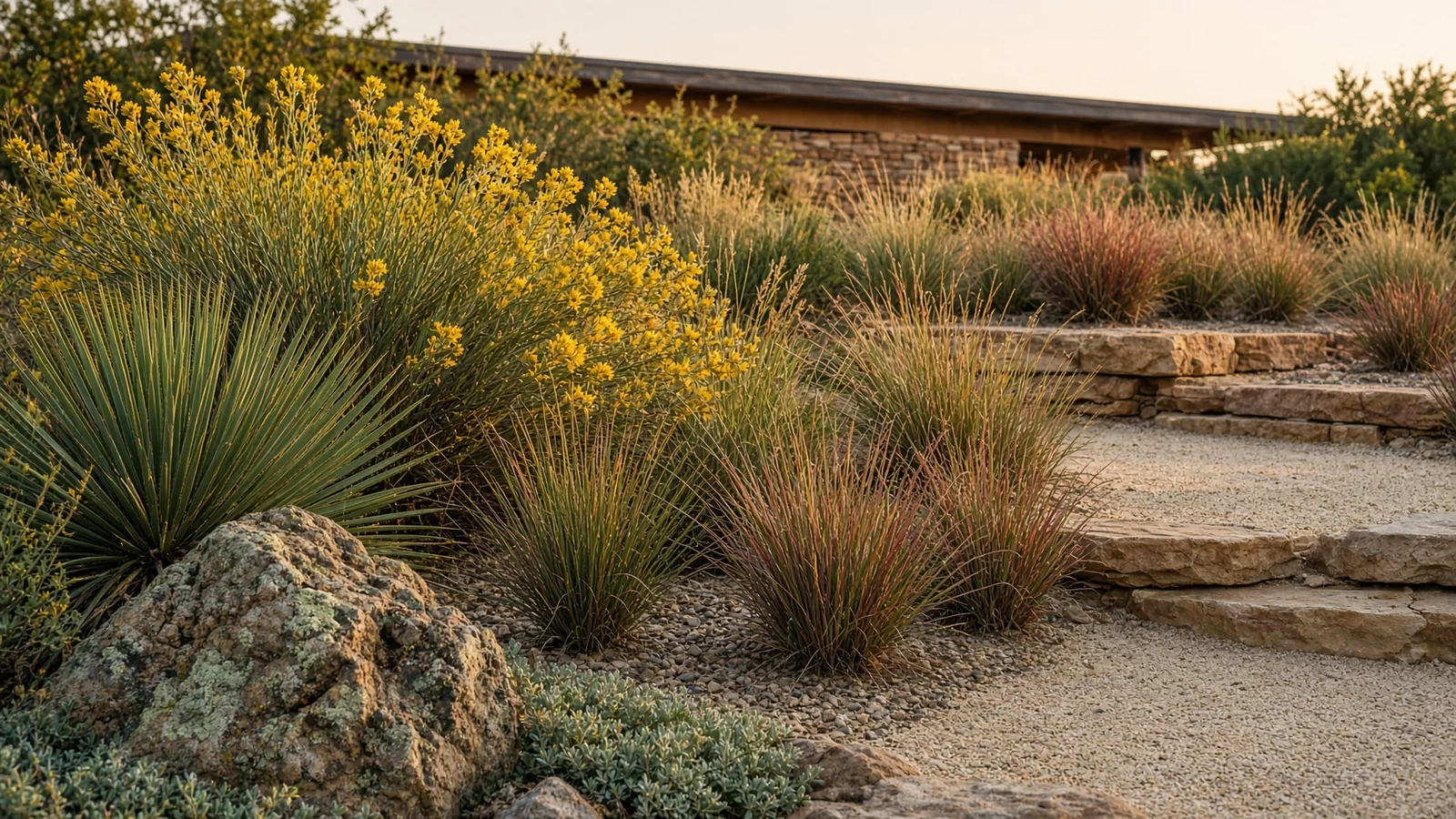
Planting, close to the ground.
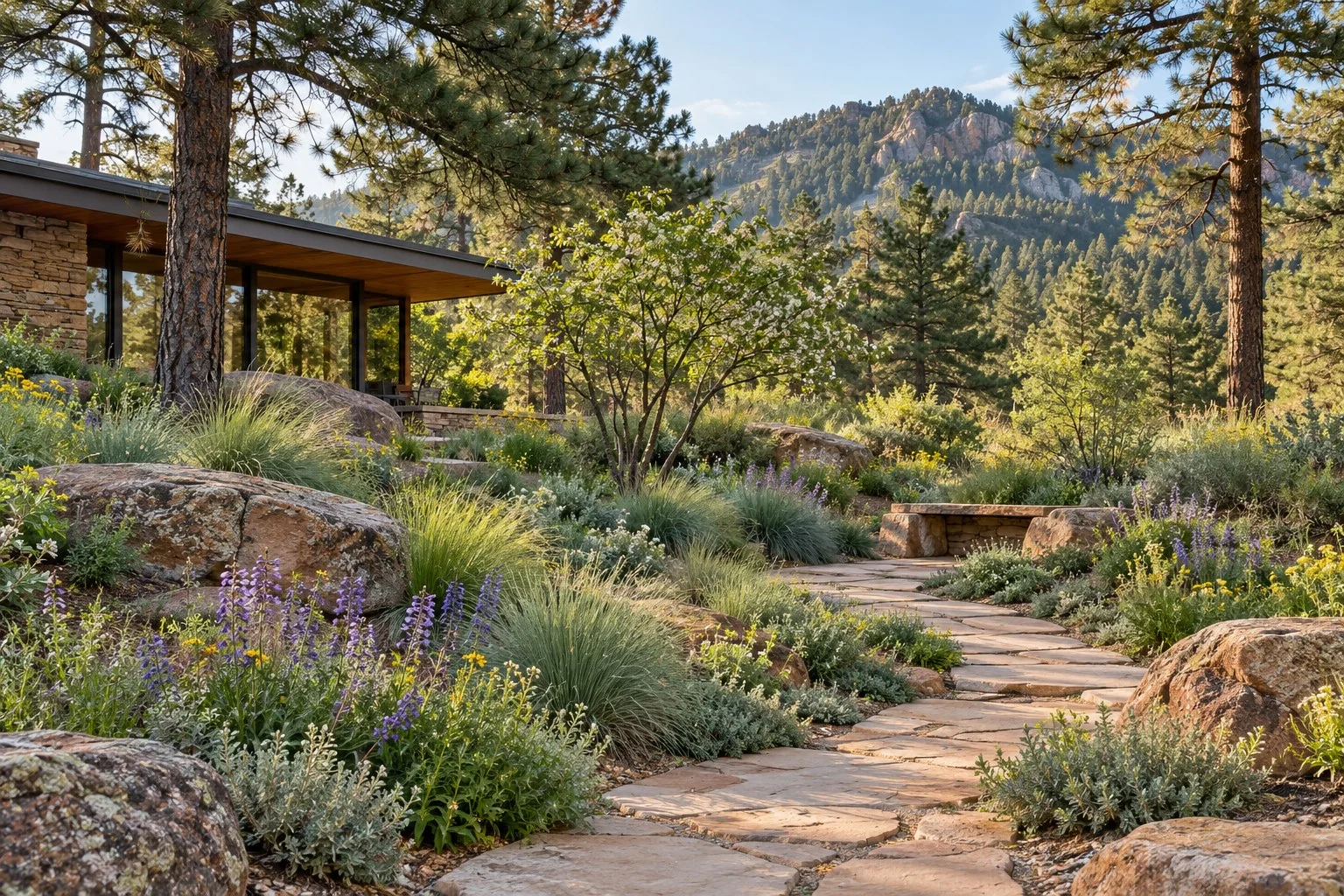
Grasses, flowering shrubs, and stone bring texture and changing light to the garden edge.
Design rendering
Let paths discover the garden.
A path is an invitation to move through a place. Its course can follow the terrain, pass beneath a tree, or turn toward somewhere worth stopping. Stone paving and changes in level should feel connected to the ground, with clear walking surfaces and planting that softens their edges. We consider the everyday routes as well as the slower ones: arriving with groceries, stepping out for coffee, or wandering through the garden as the light changes.
Make a place to gather.
A garden needs places to be, as well as things to look at. A low wall can hold the slope and become a seat. A timber bench beneath the canopy can offer a quiet outlook. A terrace beside the kitchen can make an ordinary evening outdoors easy. The scale of these spaces grows from how you want to use them, with shelter, shade, and the relationship to the house considered together.
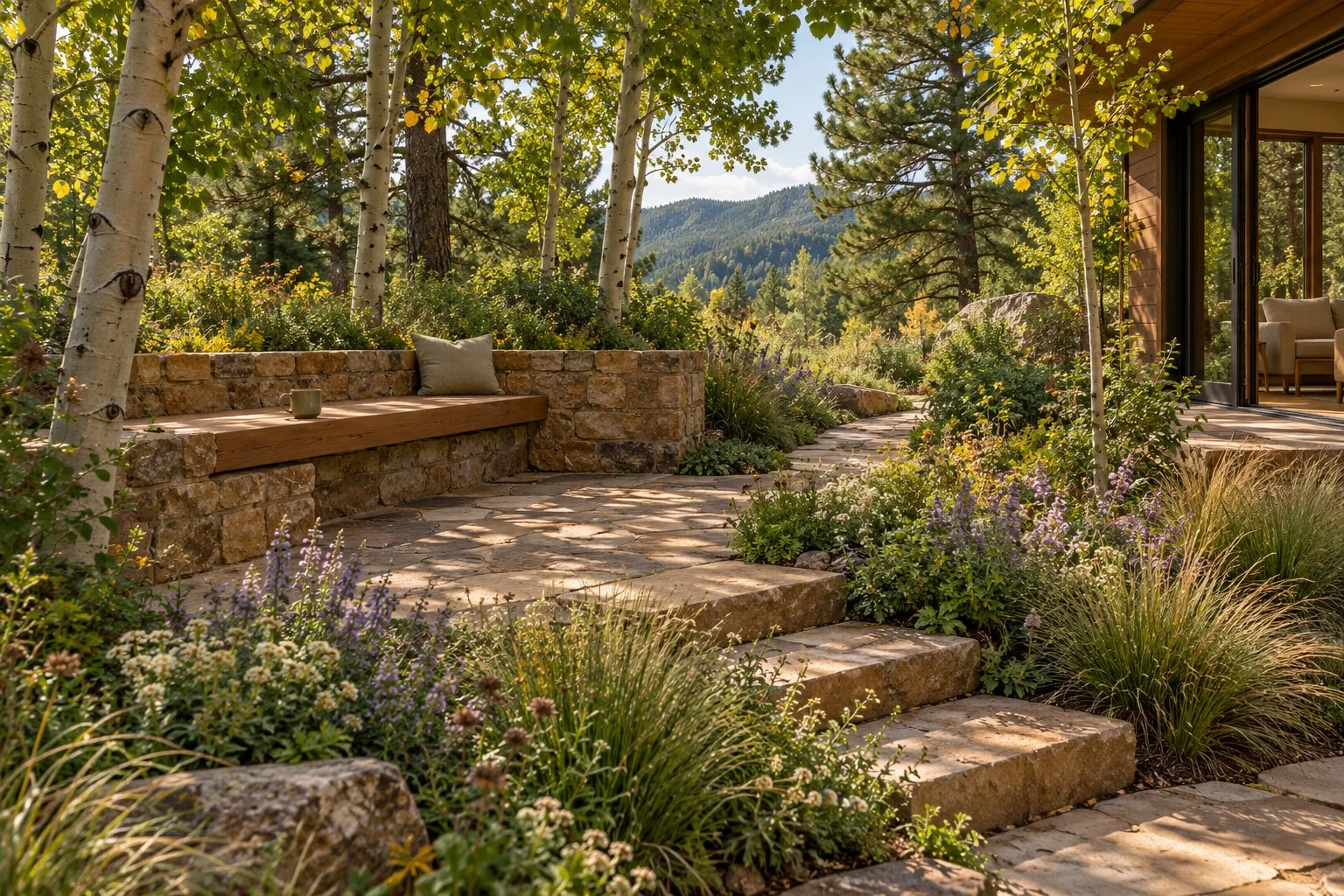
Somewhere to stay a while.
A sheltered seat beneath the trees makes the garden part of everyday life.
Design rendering
Design from both sides of the glass.
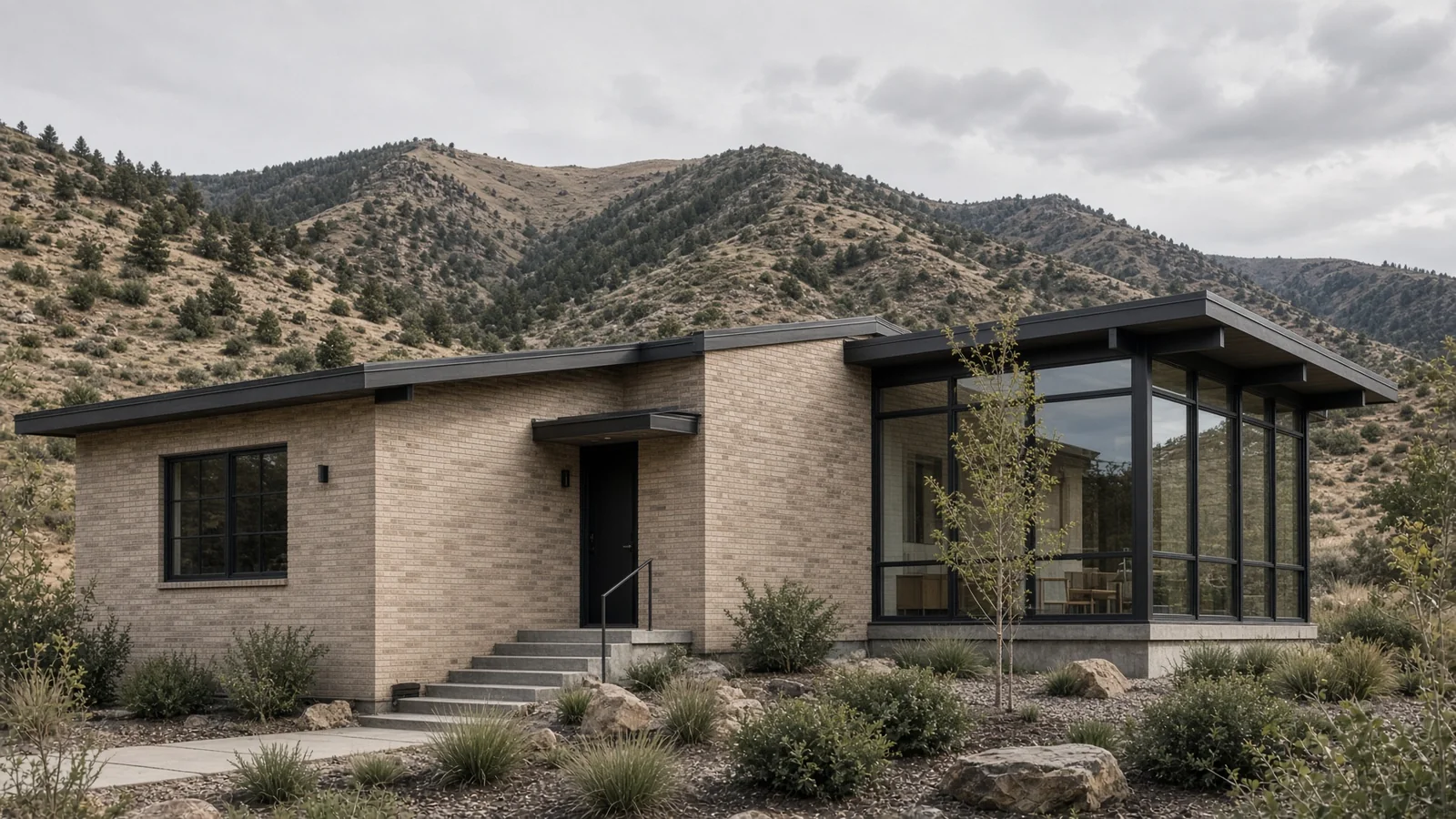
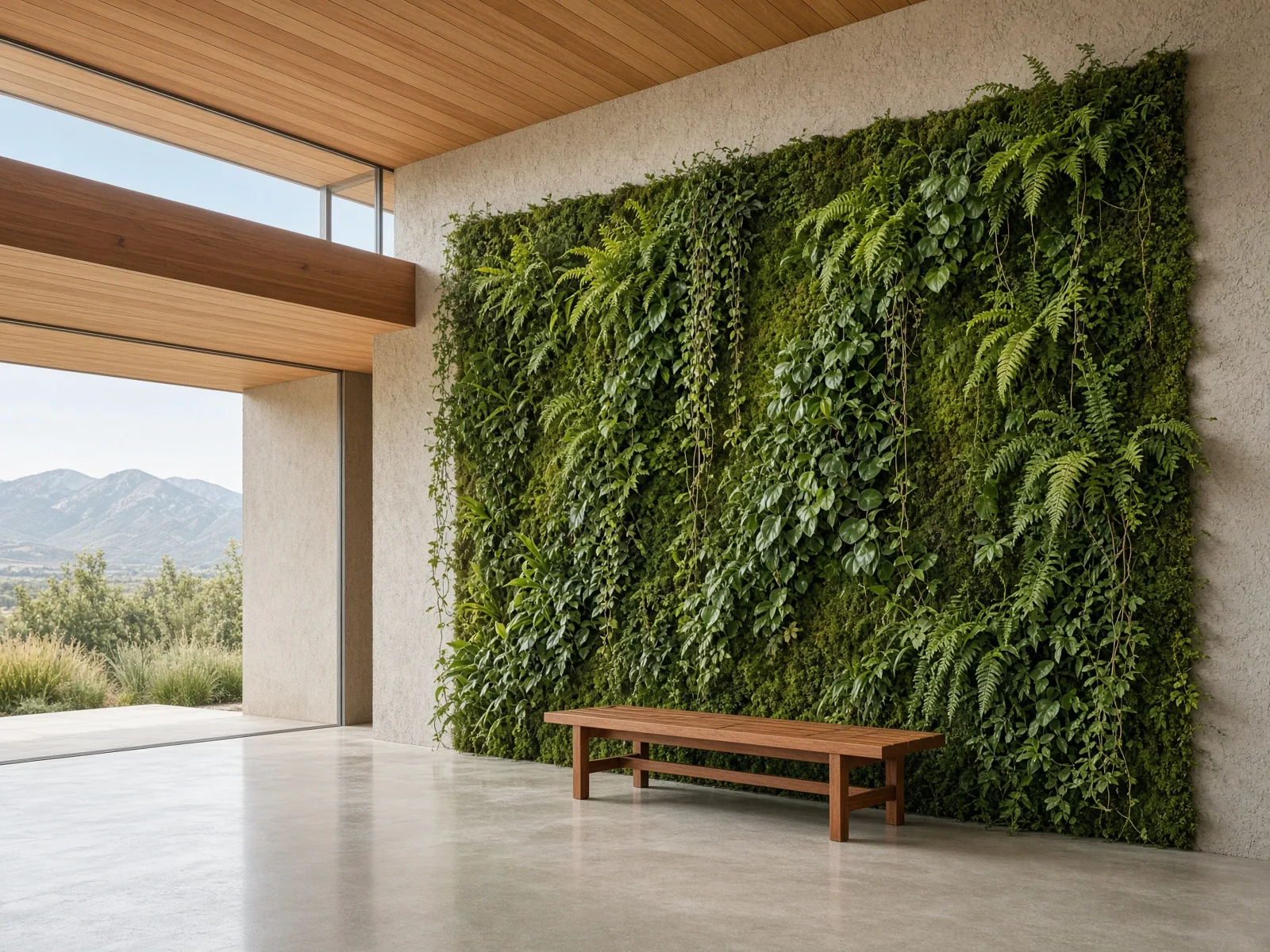
Inspired by mid-century modern design, we consider the interior and landscape as one continuous experience. A garden seen from a favorite chair matters as much as the view from the path. Planting can frame the glass, extend the feeling of a room, or offer privacy while preserving a longer outlook. Stone, timber, and the line of a low wall can connect an outdoor space to the home without making every element match.
A garden that can grow into itself.
We think beyond the first season: how planting will fill out, where maintenance access belongs, and how the garden will look as flowers give way to seedheads and the trees change. Watering, establishment, pruning, and ongoing care are part of the conversation from the beginning. We welcome collaboration with growers, landscape specialists, stoneworkers, and clients who want to shape a garden over time—from a small courtyard to a broader landscape around the home.
Original landscape study
Bring a garden you would like to rethink, a place you want to preserve, or an idea you want to explore. We are open to collaborations and experimentation.