28 January 2026 · 7 min
Living walls in a dry climate
Moss when you want stillness. Live plants when you want weather indoors. Either way, detail it like construction.
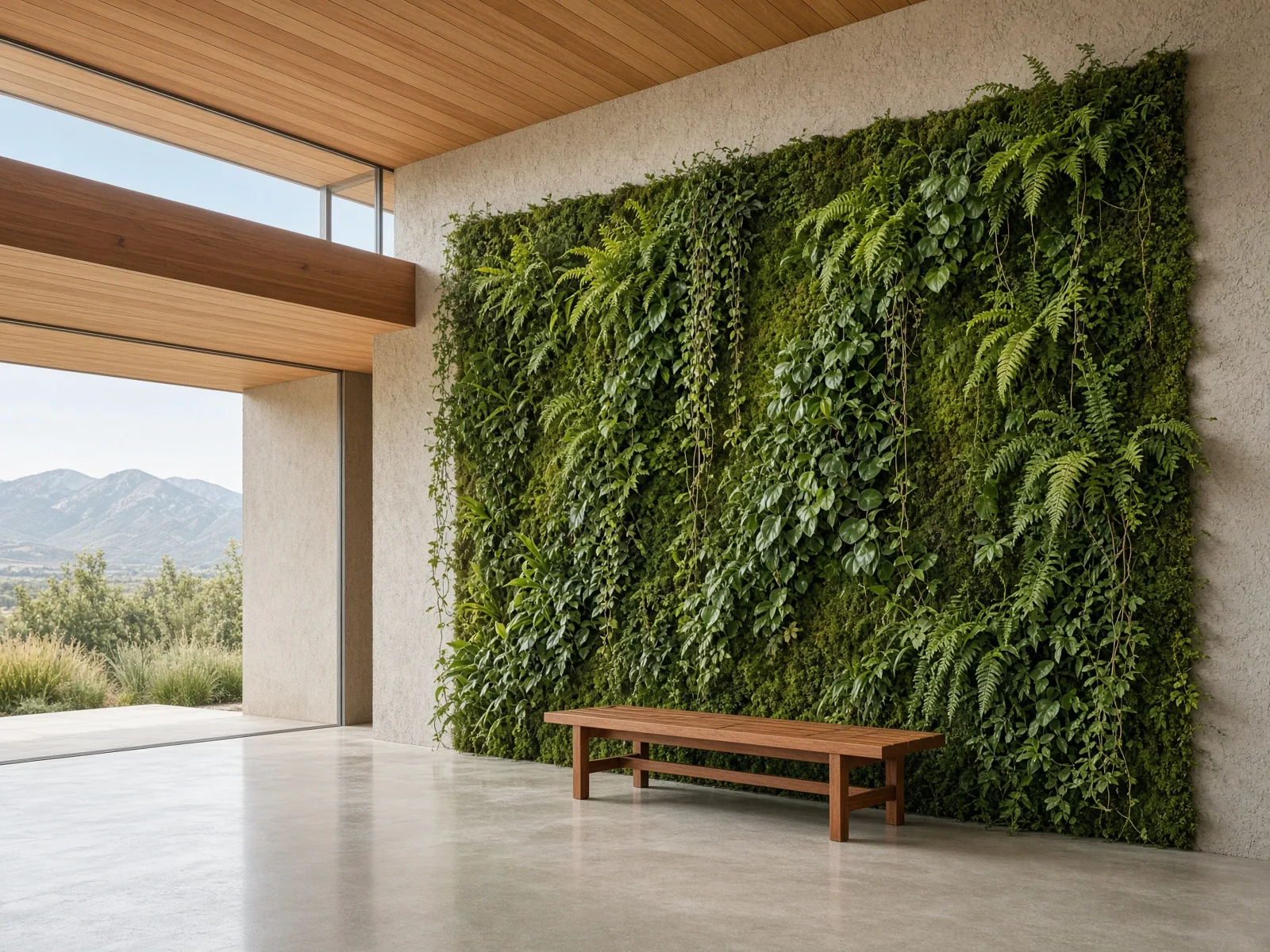
Colorado is bright, dry, and high. A living wall that was designed for a humid coastal lobby will fail here — or it will live only as long as a maintenance contract pretends. ArcSalt treats living walls as installations with a climate, not as décor.
Should I choose moss or live plants?
Choose preserved moss when you want a green plane with no irrigation, no grow lights, and almost no seasonal drama. Sheet moss and bun moss read as mineral. Choose a live planted wall when you want growth, scent, and the small weather of watering — and when you can give it light, a waterproof cavity, and a winter plan.
Will a living wall damage a mid-century interior?
It will if it is hung on original plaster with a consumer irrigation kit. It will not if the wall is a designed assembly: ventilated cavity, waterproof backing, drip collection, and a break from historic millwork. The plants are a finish. The assembly is architecture.
What plants survive indoor Colorado air?
Ferns want shade and a little more humidity than a typical winter house will give them — they belong near a kitchen court or a bathroom with a glass wall. Succulents and many peperomias take the bright dry air near glass. Herbs can live in a planted kitchen panel if the light is honest. Species lists are written per room, not copied from a tropical hotel.
Outdoor living walls at altitude
A courtyard screen of live plants on the Front Range needs freeze strategy, wind, and a south or east exposure. Native vines and drought-tolerant perennials are better citizens than tropicals left outside. Moss panels outdoors are a different product — and often the wrong one, unless they are truly preserved and UV-stable.
ArcSalt is a design studio in Golden, Colorado. Start a conversation · [email protected]
- living walls
- plants
- interiors